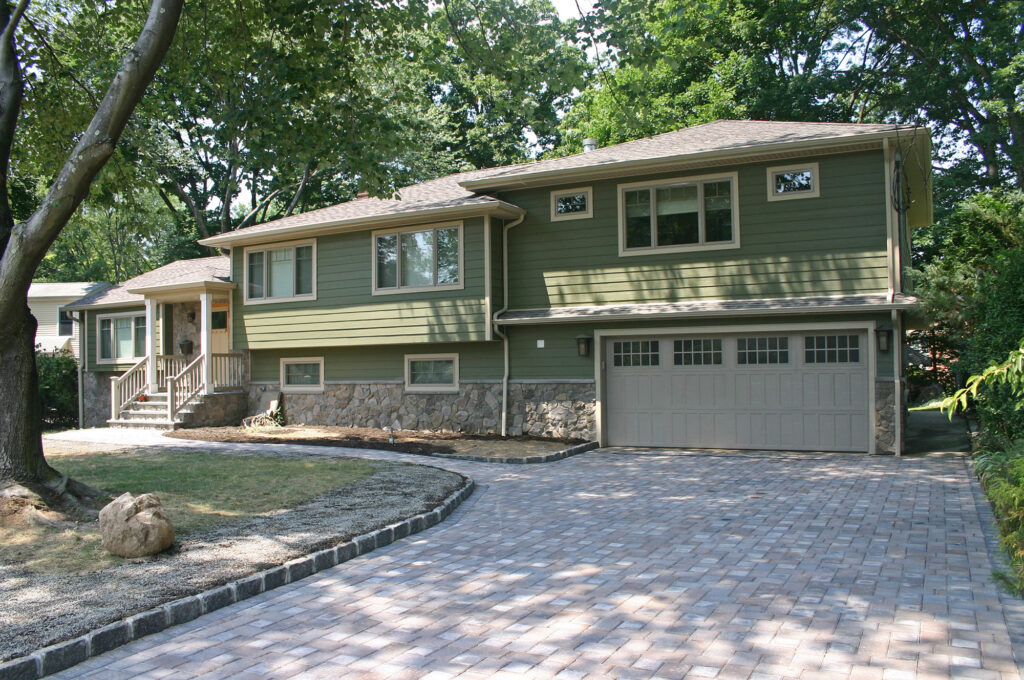
At some point in every split-level owner’s life, the question comes up: what if we just added on? Maybe the family has outgrown the existing footprint. Maybe you’ve already tackled every renovation project on the list — the kitchen, the bathrooms, the whole modernization — and you still need more space. Whatever the reason, adding onto a split-level home is absolutely doable. But it’s more complex than a standard ranch addition and it requires a different kind of planning. This guide covers every type of addition available for a split-level, what each one actually costs in 2026, the structural questions you need to answer first, and what the process looks like from first conversation to finished room.
Can You Add onto a Split Level Home?
Yes — but the answer is more nuanced than yes or no. Split-level homes are structurally more complex than ranch or colonial homes because the staggered floor levels create a foundation and framing system that doesn’t behave like a single-story structure. This doesn’t make additions impossible. It makes them more planning-intensive and more dependent on what your specific home’s foundation and framing can support.
The most important first step — before you talk to a contractor, before you sketch floor plans, before you do anything else — is a structural engineer assessment. This costs $1,500–$4,000 depending on the scope, and it tells you exactly what your current foundation and framing can support and what reinforcement work would be required for each addition type you’re considering. It is the best money you will spend in this process.
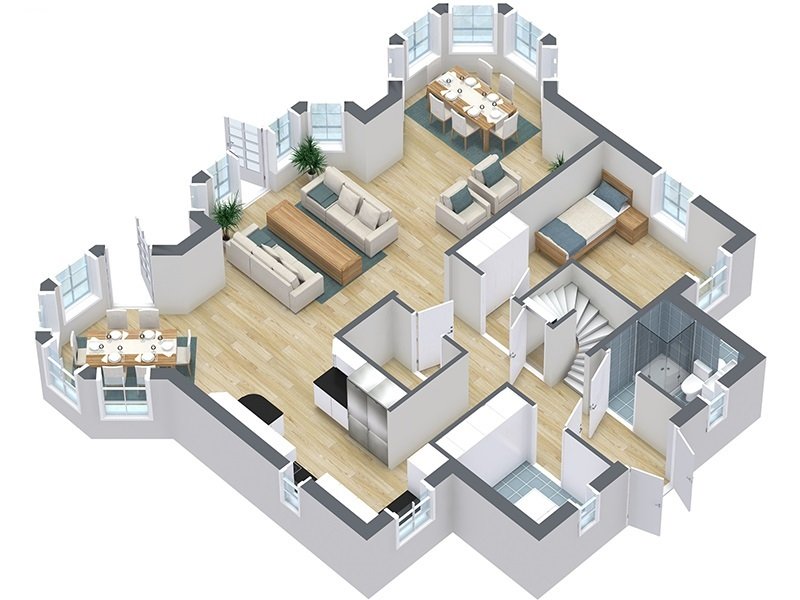
Split level floor plans are complex. RoomSketcher makes it easy to map out your existing layout, plan wall removals, and design the open floor plan you've been picturing — before you talk to a single contractor.
The 5 Types of Split Level Home Additions
Not all additions are equal in complexity, cost, or how well they work with split-level architecture specifically. Here’s a breakdown of every option, most to least complex:
1. Second Story Addition
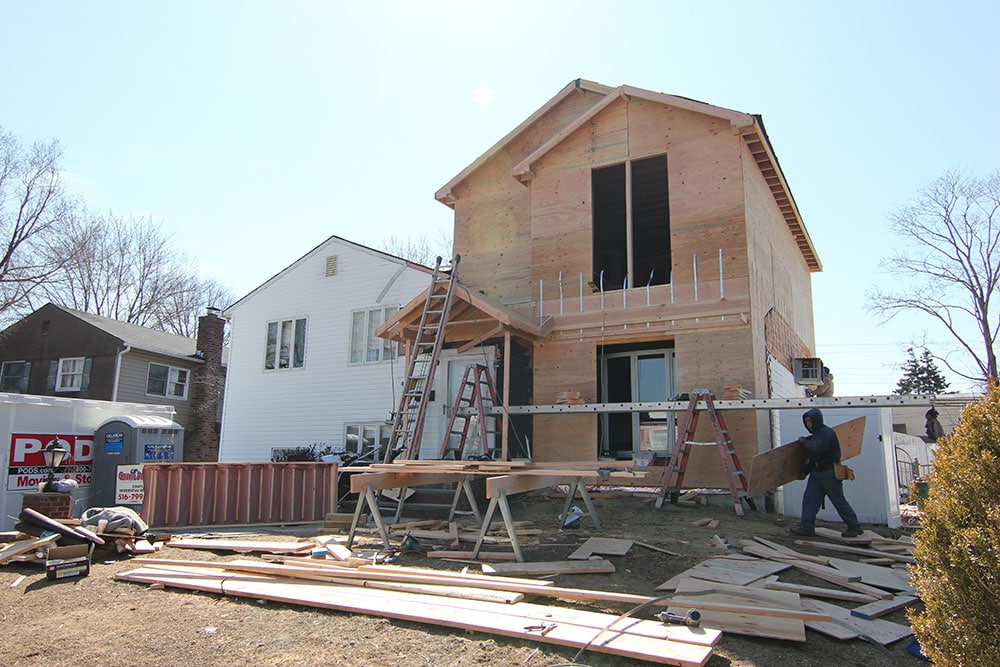
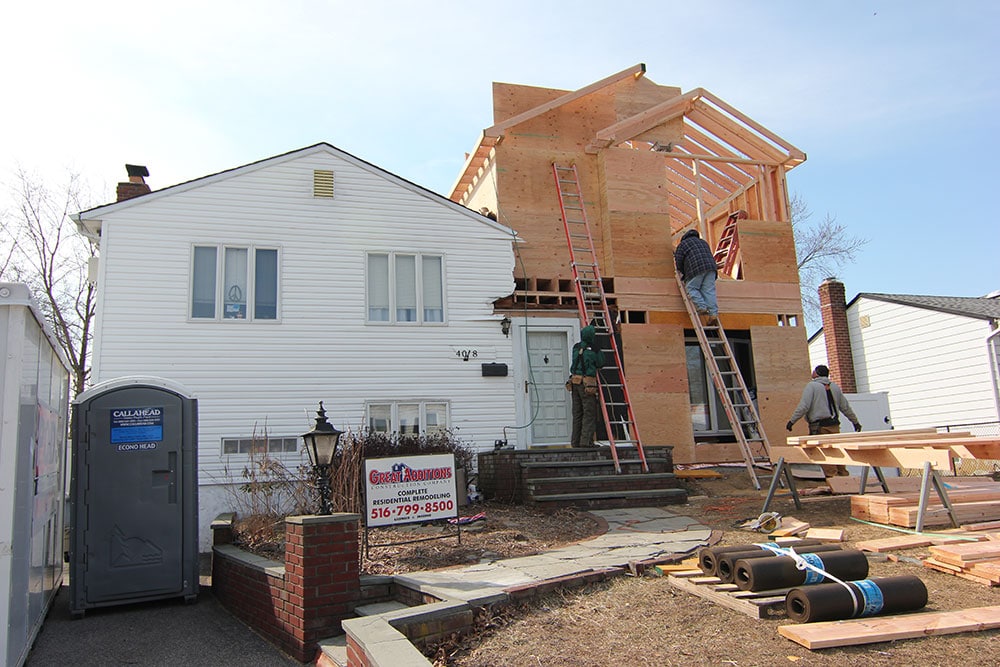
The most dramatic option and the one most people picture when they think “adding on.” A second story addition on a split-level is typically built over the garage or over the lower single-story section of the home — not over the entire existing structure, which would require far more structural work and cost.
This is the most expensive and most disruptive type of addition available. Plan on temporarily relocating during the roof removal and framing phase — typically 2–4 weeks — and budget $3,000–$8,000 for temporary housing and storage during that period.
What it costs in 2026:
| Addition Type | Cost Range | Notes |
|---|---|---|
| Partial second story (over garage or single-story section) | $60,000–$200,000+ | Most common for split-levels. Adds 400–800 sq ft typically. |
| Full second story (over entire footprint) | $200,000–$750,000+ | Rarely done on split-levels due to structural complexity |
| Per square foot range | $200–$500/sq ft | Higher end for premium finishes or complex structural work |
| Foundation reinforcement (if needed) | $10,000–$50,000 | Depends on current foundation condition |
| Structural engineering assessment | $1,500–$4,000 | Non-negotiable first step |
| Permits | $1,200–$2,000 | Varies significantly by jurisdiction |
What’s involved:
- Structural engineering assessment of existing foundation and framing
- Foundation reinforcement if required (common in homes built before 1980)
- Roof removal over the section being built above
- New floor joists, walls, ceiling joists, and roof structure
- New staircase to access the addition
- HVAC extension or new zone to serve the added square footage
- Electrical panel upgrade (likely) and new circuits throughout
- Plumbing if adding a bathroom (highly recommended — without a bathroom, a second story addition loses significant utility and resale value)
Best for: Split-level owners who need additional bedrooms and have a large enough garage or single-story section to build above. Preserves yard space and avoids lot line issues.
2. Bump-Out Addition
A bump-out is a small extension of an existing room — typically 2–4 feet — that adds meaningful square footage without the structural complexity of a full addition. On a split-level, bump-outs work best on the kitchen (to expand the cooking and dining area), the main living room (to create a reading nook or bay window), or a bedroom on the upper level.
What it costs in 2026: $15,000–$40,000 depending on size and what’s inside the bump-out. A bump-out with a new window and flooring extension is at the low end. A bump-out that adds a new kitchen sink location with plumbing extension is at the high end.
What’s involved: New footings at the bump-out corners, floor framing extension, wall framing on three sides, roof extension (either a shed roof or matching the existing roofline), insulation, drywall, and whatever finishes match the existing room. Simpler projects can be DIY-adjacent for confident builders; most homeowners hire out the foundation and framing work.
Best for: Targeted space problems — the kitchen that’s just slightly too small, the master bedroom that doesn’t have room for a sitting area. The best bang-for-buck addition for split-level owners who need a specific fix rather than general square footage.
3. Ground-Level Room Addition
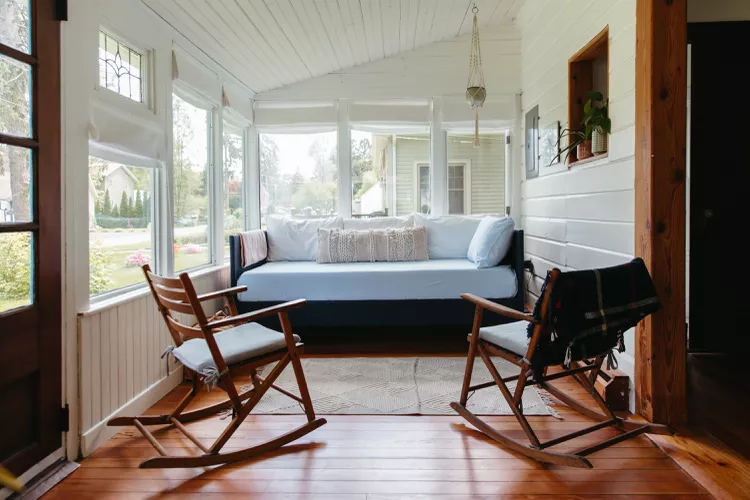
A full ground-level addition extends the footprint of the home outward on the lot. On a split-level, this typically connects to either the main level or the lower level depending on the grade of your property. A ground-level addition connected to the main level is the most straightforward to integrate architecturally. A ground-level addition connected to the lower level effectively adds a new wing to the den or basement area.
What it costs in 2026: $20,000–$80,000 for a basic addition. A finished room with standard finishes at 200 sq ft is at the low end; a larger addition with a bathroom and premium finishes pushes significantly higher. Per square foot, expect $150–$300.
What’s involved: Excavation and new footings, foundation walls if needed, floor framing, exterior wall framing, roofline integration (this is where it gets tricky — matching the existing roofline on a split-level is more complex than on a ranch), insulation, drywall, flooring, and finishes.
Lot considerations: Before planning any ground-level addition, check your local zoning setback requirements — these dictate how close to your property line you can build. On established split-level lots, side setbacks can significantly limit how far you can extend in any direction. Your local building department will tell you the exact requirements for your specific parcel.
Best for: Adding a new room type that doesn’t exist in the current footprint — a home office, a guest suite, a sunroom, or a garage. Less disruptive than a second-story addition during construction.
4. Garage Conversion or Addition
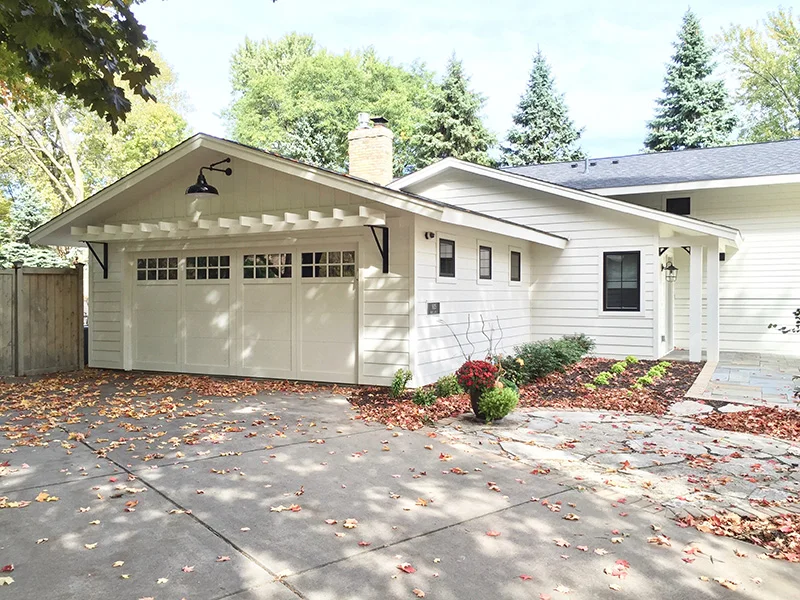
What I wanted to convey with this picture is that you don’t always have to have your garage doors facing the street, maybe a side or rear entry works for you, this all depends on your lot orientation though.
Split-level homes almost universally have an attached garage at the lower level — and that garage represents untapped square footage already under roof. Converting an existing garage into living space is one of the most cost-effective ways to add a bedroom, home office, or studio on a split-level without any new foundation work.
What it costs in 2026: $20,000–$75,000 depending on finish level. A basic conversion with insulation, drywall, flooring, and a mini-split HVAC unit is at the lower end. A full conversion with a bathroom, egress window, and premium finishes pushes toward the higher end.
What’s involved:
- Insulating the garage floor (typically a concrete slab), walls, and ceiling
- Installing a subfloor system over the concrete
- Framing interior walls if creating multiple spaces
- Adding or upgrading HVAC — a mini-split is the most practical solution for a garage conversion since running new ductwork is expensive
- Installing an egress window if the conversion will be used as a bedroom (required by code in most jurisdictions)
- Replacing the garage door opening with a proper exterior wall, door, and window
- Electrical upgrades (garage circuits are usually inadequate for living space)
Important permit note: Garage conversions require permits in virtually every jurisdiction. Converting a garage to a legal bedroom requires meeting egress requirements and may require the room to be counted as an ADU (Accessory Dwelling Unit) in some areas, which triggers additional requirements. Check with your local building department before starting.
Airbnb/rental opportunity: A converted garage with its own entrance — which many split-level garages have — is a natural short-term rental unit. The private entrance that most split-level garages already have is an enormous advantage for short-term rental setups. The lower level finishing guide covers the framing and HVAC considerations that apply equally to a garage conversion.
Best for: Homeowners who need one additional room and don’t want the complexity or cost of a structural addition. The fastest path to additional living square footage on a split-level.
5. Sunroom or Three-Season Room
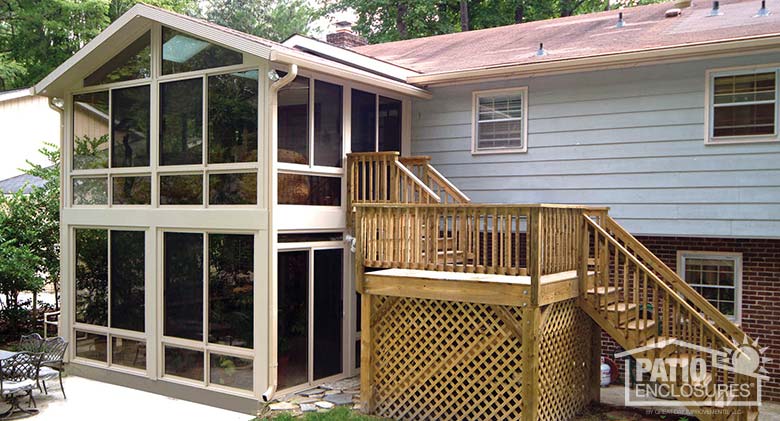
A sunroom addition creates a climate-transitional space between the main living area and the outdoors. On a split-level, sunrooms typically connect off the main level and often replace or expand on an existing sliding door or back entrance. They range from simple three-season enclosures to fully insulated, climate-controlled rooms.
What it costs in 2026: $30,000–$80,000 for a fully insulated, climate-controlled sunroom. A basic three-season enclosure starts around $15,000–$25,000 but has limited year-round usability.
Best for: Split-level owners who want expanded outdoor-adjacent living space rather than pure square footage. High usability, relatively lower cost, and good ROI in markets where outdoor living is valued.

Giveaways, Ebook, and Forum coming soon. Be the first to know about new content!
Before You Do Anything: The Structural Assessment
This deserves its own section because it’s the step most homeowners want to skip and the step that saves everyone the most money and heartbreak.
A structural engineer will assess:
- Foundation condition and capacity: Can the existing foundation support the additional load? Split-level homes built before 1975 often have foundations designed for the original single-story footprint and may require reinforcement for any vertical addition.
- Existing framing: Are the current wall studs and floor joists adequate to support the new weight? Older lumber sizing was sometimes undersized by today’s standards.
- Soil conditions: Expansive clay soils or poorly draining lots can cause foundation movement that makes certain additions inadvisable without extensive ground preparation.
- Load path: Where does the structural load travel through the existing home, and does the planned addition interrupt or compromise that path?
Find a licensed structural engineer through your state’s engineering association or ask your architect for a referral. Most charge $1,500–$4,000 for a residential addition assessment. The report they produce becomes the technical backbone of your permit application and your contractor bids.
Do You Need an Architect?
For bump-outs and simple ground-level additions, a design-build contractor with an in-house designer may be sufficient. For second-story additions and anything that changes the roofline significantly, yes — hire an architect.
Here’s the honest reason: split-level rooflines are not straightforward. The staggered levels create complex roofline relationships that a standard contractor sketch won’t catch and a bad roofline integration is one of the most expensive mistakes to fix after the fact. An architect who understands mid-century architecture will also ensure the addition looks like it belongs to the house rather than like it was bolted on.
Architectural fees typically run 5–15% of the total project cost, or $3,000–$8,000+ for a detailed set of drawings for a residential addition.
The Permit Process
Every addition type on this list requires permits. This is not optional, it is not something you can do after the fact, and it is not something a contractor should be telling you to skip. Building without a permit on an addition this size will surface at closing when you sell the home — and it will cost you significantly more to remedy then than it would have to pull the permit in the first place.
Before planning any addition, call 811 to locate underground utilities, and call your local building department to confirm:
- Zoning setback requirements for your specific parcel
- Maximum lot coverage percentage (how much of your lot can be covered by structure)
- Height restrictions in your area
- HOA restrictions if applicable — these are separate from building codes and can be more restrictive
- Whether your addition would trigger an ADU classification
Permit costs for a residential addition typically run $1,200–$2,000, though complex projects in high-cost markets can run higher. Factor this into your budget from day one.
HVAC, Electrical, and Plumbing: The Hidden Costs
These three systems are where addition budgets get surprised. Any addition of meaningful size will require:
HVAC
Your existing system almost certainly cannot adequately serve new square footage without modification. Options include extending existing ductwork (if the system has capacity), adding a separate zone, or installing a mini-split for the new space. A mini-split is often the most practical and cost-effective solution for additions — no new ductwork required, excellent efficiency, and independent temperature control. Budget $2,500–$5,000 per zone installed. For a full second story, expect to add $8,000–$20,000 in HVAC work.
See the complete HVAC and ductwork guide for how to approach mechanical systems in a split-level renovation context.
Electrical
New square footage needs new circuits. A second-story addition will likely require a panel upgrade if your current panel is at or near capacity — common in homes built in the 1960s and 70s with 100-amp service. Panel upgrade costs $1,500–$4,000. New circuits and wiring throughout the addition run $3,000–$8,000 depending on scope. Don’t forget lighting planning for the new space — this is the easiest step to forget during structural planning and the most annoying to retrofit after drywall is up.
Plumbing
Adding a bathroom to any addition adds $8,000–$20,000 in plumbing costs alone depending on how far the new fixtures are from existing supply and drain lines. For a second-story addition especially, a bathroom is strongly recommended — a second story without a bathroom loses significant resale value. Budget for it from the start rather than trying to add it later.
What Does a Split Level Addition Add to Your Home’s Value?
The honest answer: it depends heavily on the addition type, your market, and how well the addition integrates with the existing architecture.
General benchmarks to keep in mind:
| Addition Type | Typical ROI at Resale |
|---|---|
| Garage addition (detached) | 60–80% |
| Ground-level room addition | 50–65% |
| Sunroom addition | 50–60% |
| Second story (partial) | 50–65% |
| Garage conversion (with egress/bathroom) | 65–80% |
| Master suite addition (second story) | 50–60% |
The additions with the highest ROI are those that add a missing functionality — a garage where there wasn’t one, a bedroom to bring a three-bedroom home to four, or a bathroom that eliminates a bottleneck. Additions that add more of what already exists (fourth bedroom when there are already four) return less at resale.
For a deeper look at which renovations add the most value to a split-level specifically, the complete renovation cost guide covers the full ROI picture across every project type.
How Long Does a Split Level Addition Take?
| Addition Type | Design & Permits | Construction | Total Timeline |
|---|---|---|---|
| Bump-out | 1–2 months | 4–8 weeks | 3–4 months |
| Ground-level room addition | 2–4 months | 2–4 months | 4–8 months |
| Garage conversion | 1–2 months | 4–8 weeks | 3–4 months |
| Sunroom | 1–3 months | 6–12 weeks | 3–6 months |
| Partial second story | 3–6 months | 4–8 months | 9–14 months |
The design and permit phase is where most projects get surprised on timeline. One experienced contractor told me the right way to think about a major addition: plan a full year from first conversation to occupancy, use that year productively to finalize designs, select finishes, and source materials in advance, and you’ll actually have a smoother construction phase than if you try to rush the front end. He’s right.
Contingency Budget: The Number Nobody Wants to Hear
Set aside 15–20% of your total project budget as a contingency fund before you start. For a $200,000 addition, that’s $30,000–$40,000 sitting untouched until the project is done.
This is not pessimism. It’s the math of working on older homes. Split-level homes built in the 1960s and 70s routinely reveal surprises once walls come open: undersized electrical panels, outdated plumbing that needs upgrading to code, insulation that doesn’t meet current standards, and occasionally structural issues that weren’t visible in the original assessment. These aren’t contractor failures or oversights — they’re the reality of working on 50-year-old homes.
The homeowners who come through addition projects without financial stress are the ones who budgeted for the unexpected. The ones who blow their budget mid-project are almost always the ones who spent their entire budget before surprises showed up.
Build Up, Build Out, or Renovate What You Have?
This is the question underneath the whole addition conversation. For some homeowners, a well-executed renovation of existing space — finishing the lower level, opening the floor plan, updating the kitchen and bathrooms — delivers everything they need without the complexity and cost of a structural addition.
Before committing to an addition, honestly assess whether you’ve maximized your existing square footage:
- Is the lower level finished and fully functional? An unfinished lower level is cheaper to convert than any addition. See the complete lower level finishing guide.
- Has the floor plan been opened up? A dark, compartmentalized split-level with all walls intact feels smaller than it is. Removing one partition wall can change the perception of the entire main level. See the kitchen remodel and floor plan guide.
- Is the garage being used for cars, or is it functioning as storage? Converting the garage to living space while building a small detached garage is sometimes cheaper than a second-story addition.
If you’ve answered yes to all three and still need more space, an addition is the right answer.
Matching the Addition to Your Existing Architecture
The single biggest visual mistake in home additions is an addition that looks added on. You know it when you see it — the roofline that doesn’t match, the siding that doesn’t quite align, the window style that belongs to a different decade.
For split-level homes specifically:
- Match the roofline pitch exactly. Split-level rooflines are already complex — adding a mismatched pitch is immediately obvious from the street.
- Use the same siding material and profile. If you have LP SmartSide lap siding, the addition gets LP SmartSide lap siding. Not a similar product — the same product. See the siding guide for material matching guidance.
- Match the window style and trim profile. Window trim is the detail that ties a new addition to the existing house. The same profile used on existing windows should appear on addition windows. See the exterior window trim guide for how to nail this detail.
- Consider the whole exterior at once. An addition is often the right time to repaint the entire exterior so the new and old sections are unified from day one. The exterior color schemes guide covers palettes that work across the full split-level exterior.
This one is great for exterior projects at a fraction of the cost of the Graco ones from Lowe's and Home Depot. I used this to paint my whole home exterior.

Frequently Asked Questions
Can you add a second story to a split level home?
Yes, though it’s typically done over the garage or the single-story section of the home rather than the entire existing structure. A structural engineering assessment is the mandatory first step — the existing foundation and framing must be evaluated before any vertical addition is planned. Costs run $60,000–$200,000+ for a partial second story over the garage.
How much does it cost to add onto a split level home?
It depends entirely on the type of addition. A garage conversion runs $20,000–$75,000. A bump-out costs $15,000–$40,000. A ground-level room addition runs $20,000–$80,000. A partial second story over the garage costs $60,000–$200,000+. All of these figures are 2026 estimates and will vary by location and finish level.
How long does a split level home addition take?
A bump-out or garage conversion typically takes 3–4 months from permits to completion. A ground-level room addition takes 4–8 months. A partial second story is a 9–14 month project from first conversation to move-in. The design and permit phase is where timelines most often run long — plan for it rather than being surprised by it.
Do I need a structural engineer for a split level addition?
Yes, for any addition that adds load to the existing structure — which means any vertical addition and most ground-level additions. The structural engineer assessment costs $1,500–$4,000 and is non-negotiable. It also forms the technical basis for your permit application.
Is it cheaper to add onto a split level or move to a bigger house?
In most markets, moving is less expensive than a major structural addition when you account for the full cost of the addition plus transaction costs on both sides of a home sale. However, moving doesn’t account for the value of your specific location, your established neighborhood, your lot, or the renovations you’ve already completed. The right answer depends on your market, your timeline, and what you’d actually be moving into.
What permits do I need for a split level home addition?
At minimum: a building permit for the structural work, a mechanical permit for HVAC changes, an electrical permit for new circuits, and a plumbing permit if adding fixtures. Your local building department issues all of these. In most jurisdictions you can pull permits as the homeowner; some complex projects require a licensed contractor to pull them. Budget $1,200–$2,000 for permits on a standard residential addition.
The Bottom Line
Adding onto a split-level home is one of the most significant decisions you’ll make as a homeowner — bigger in scope and cost than any of the renovation projects we’ve covered elsewhere on this site. The path forward is the same regardless of which addition type you’re considering: structural assessment first, design second, permits third, contractor bids fourth. Skip any of those steps and you’re setting yourself up for expensive surprises.
The split-level architecture that can make additions complex is also the thing that makes the result so satisfying. A well-executed addition on a split-level doesn’t just add square footage — it completes the home’s potential in a way that a stock colonial or ranch never quite achieves.
If you’re still in the renovation phase before the addition conversation, the complete split-level modernization guide covers every major project in order. And if cost planning is where you are right now, the renovation cost guide has the detailed budget breakdowns you need before talking to a single contractor.

Max
Max Lowrie, founder of MySplitLevel.com® and author of The Live In Flip© bought his first split level house in 2016. During a lengthy renovation, Max noticed that there was little useful content online specific to split-level homes. Max now devotes his time to share his knowledge hoping to help homeowners avoid unnecessary mistakes, and provide a blue print for split-level owners nationwide.
Giveaways, Ebook, and Forum coming soon. Be the first to know about new content!