Updated: May 2026
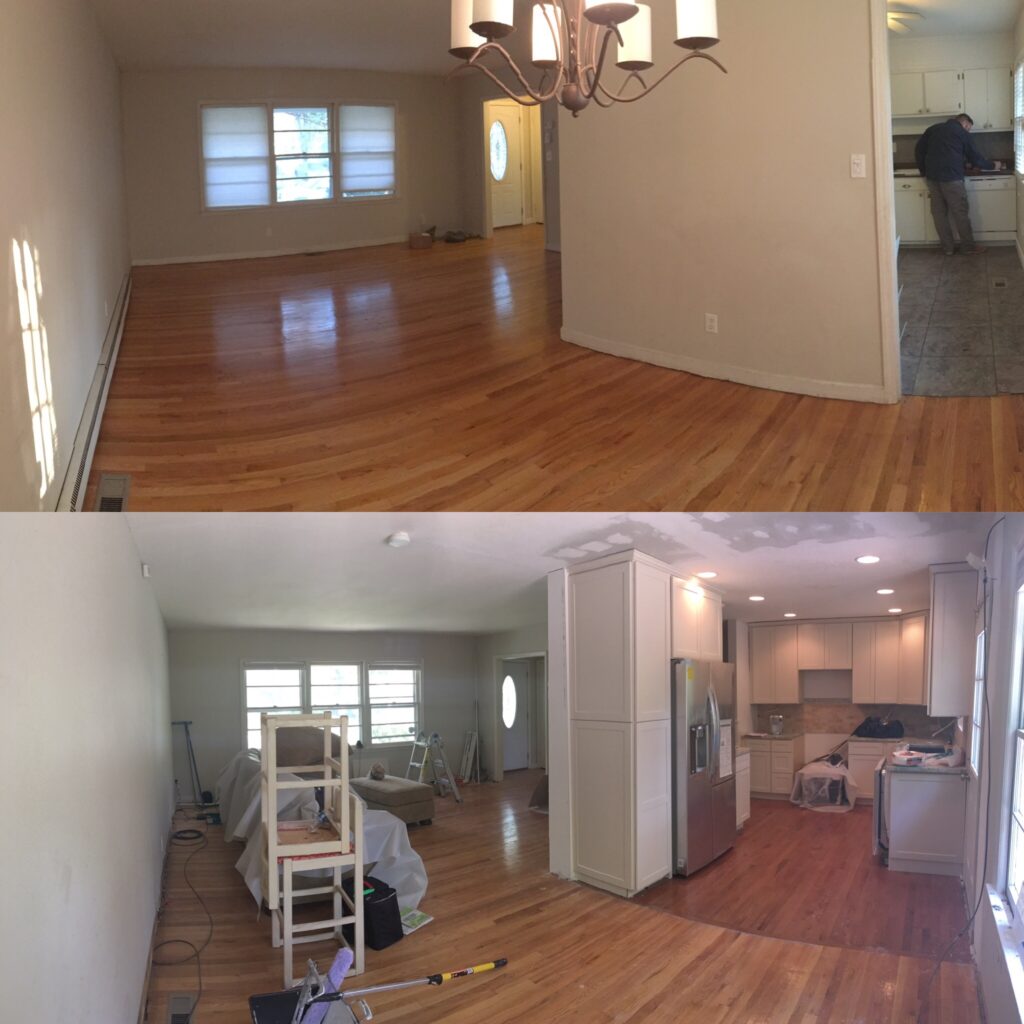
If there’s one thing every split-level home has in common, it’s a cramped, dark, closed-off kitchen. When I bought my 1960s split level, the kitchen was the first thing I attacked — and honestly, it was the renovation that made the biggest difference in the entire house. In this guide I’ll walk you through exactly how I opened up my split-level kitchen, what it actually costs in 2026, the mistakes I made so you don’t have to, and a gallery of split-level kitchen ideas from real homeowners.
How Much Does a Split Level Kitchen Remodel Cost in 2026?
Before swinging a sledgehammer, let’s talk money. Kitchen renovation costs have risen significantly since 2021 due to supply chain shifts and labor rate increases. Here’s a realistic breakdown for 2026:
| Item | DIY Cost | Contractor Cost |
|---|---|---|
| RTA Cabinets (10×10 kitchen) | $1,800–$3,500 | $4,500–$8,000 installed |
| Wall removal (non-load bearing) | $200–$500 | $800–$2,500 |
| Countertops (laminate to quartz) | $400–$900 DIY | $2,500–$6,000 installed |
| Appliances (mid-range set) | $2,500–$4,000 | Same + $300–$600 install |
| Flooring (LVP, per sq ft) | $1.50–$3.00/sq ft | $4–$7/sq ft installed |
| Full kitchen remodel (estimate) | $6,000–$12,000 | $25,000–$60,000+ |

Giveaways, Ebook, and Forum coming soon. Be the first to know about new content!
Step 1: Should You Remove the Wall? (How to Tell if It’s Load Bearing)
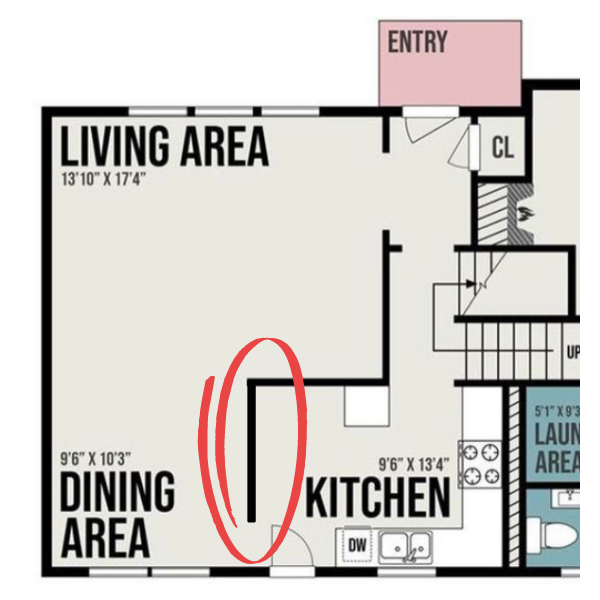
The defining feature of a split-level kitchen remodel is almost always wall removal. Most 1970s-era split levels were built with a partition wall separating the kitchen from the living room — and removing it changes everything.
Before you touch it, you need to determine if it’s load bearing. Here’s the method I used:
- Go into the attic or crawl space above the wall and look for any bracing connecting the wall’s top plate to the rafters. If you see it, stop and call a structural engineer.
- Check if the wall runs perpendicular to your floor joists (load bearing walls typically do) versus parallel (usually not structural).
- Look at your basement or lowest level — load bearing walls typically have a beam or column directly below them.
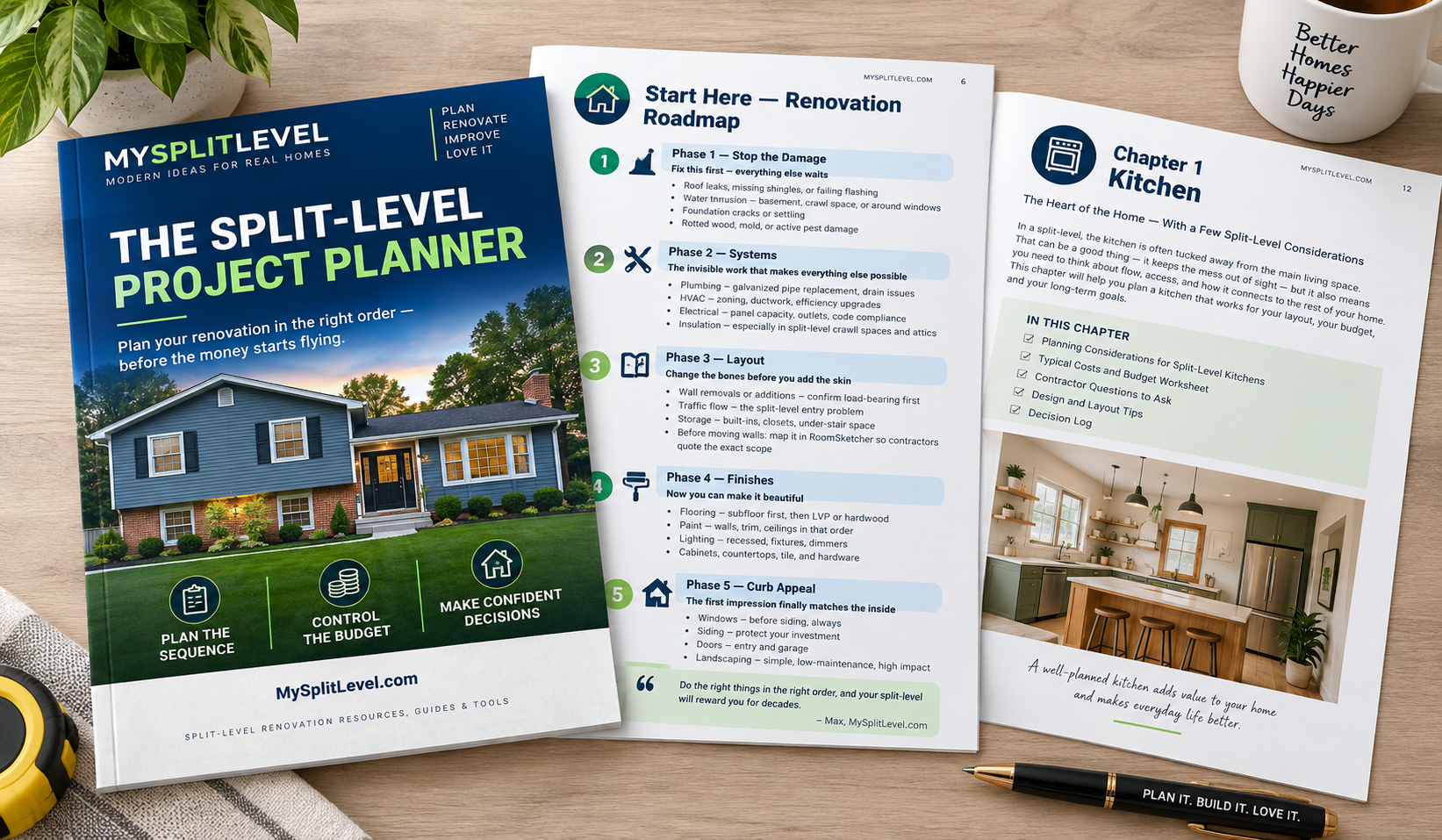
Planning a split-level renovation? I put everything I learned into one system — a room-by-room roadmap, real budget worksheets, and a contractor bid comparison tool. Built from my own renovation, not generic advice.
When in doubt, hire a structural engineer for a consult. It typically costs $300–$600 and can save you tens of thousands in mistakes.
Safety checklist before any demo:
- Turn off breakers for all kitchen circuits
- Use a non-contact voltage tester before cutting into any wall
- Wear safety glasses and a quality N95 dust mask — older homes may contain lead paint or asbestos in walls
- Have a helper present for wall demo — drywall sheets are heavy and unpredictable when cut loose
Step 2: Gutting the Old Kitchen
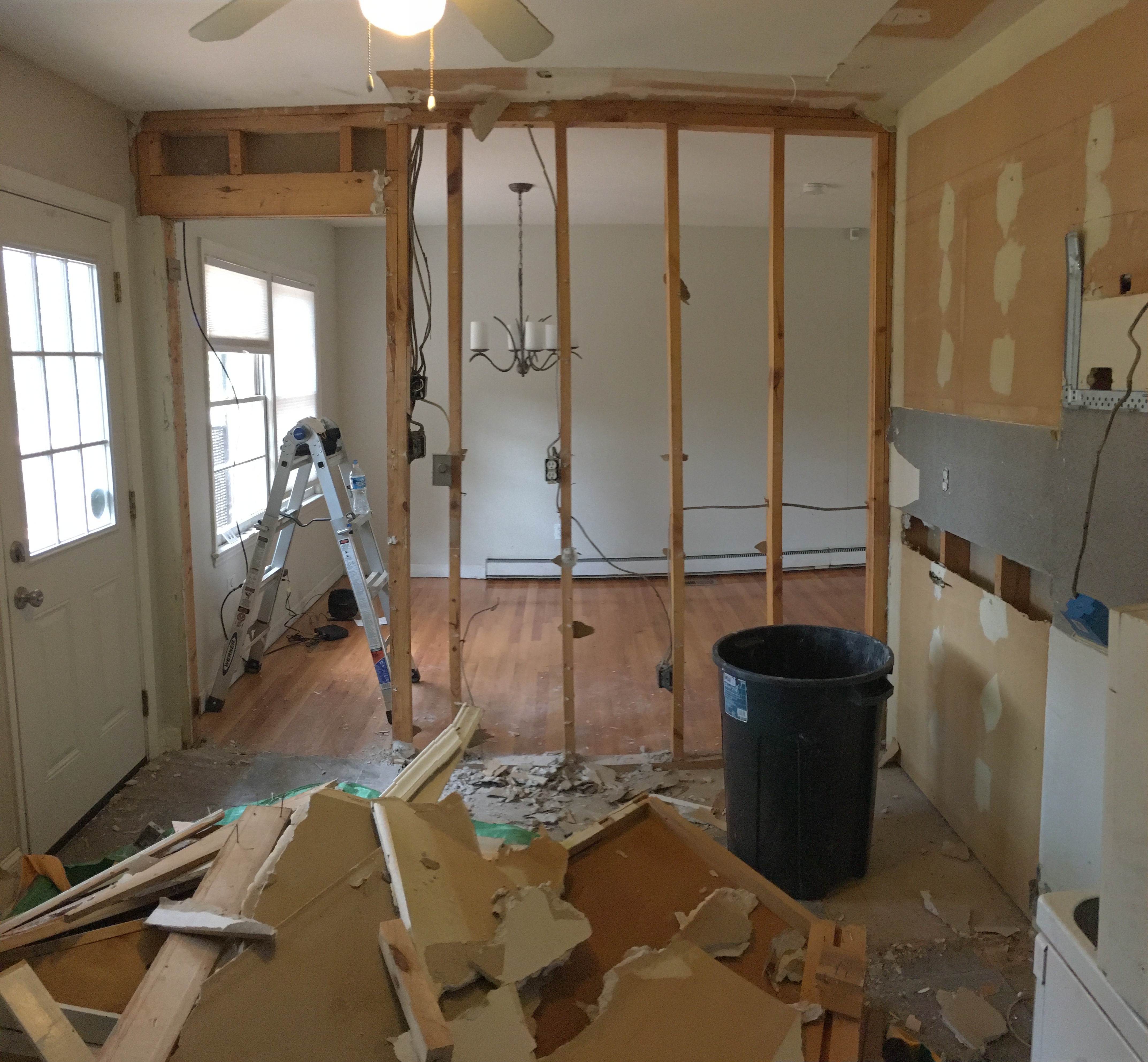
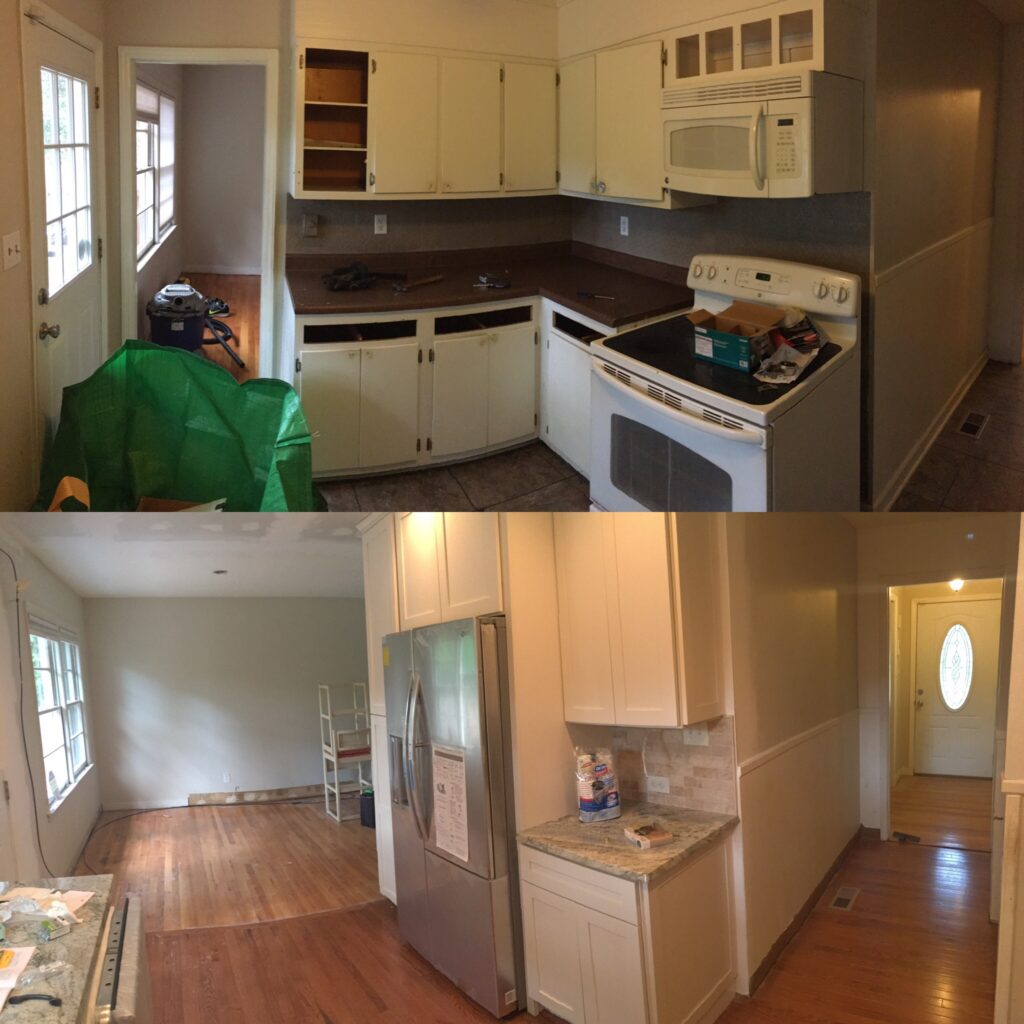
Before the wall comes down, the old cabinets go out. In my case, painting the original cabinets wasn’t even an option — they were water damaged, poorly built, and set at the wrong heights. Out they went.
Tip: When you gut old cabinets, take the opportunity to look at what’s behind them. In my kitchen I found a section of weakened subfloor from an old dishwasher leak, exposed wiring that wasn’t up to code, and evidence of a mouse situation that had been living rent-free behind the stove for God knows how long. Better to find it now than after new cabinets are installed.
Step 3: Choosing Your New Cabinets
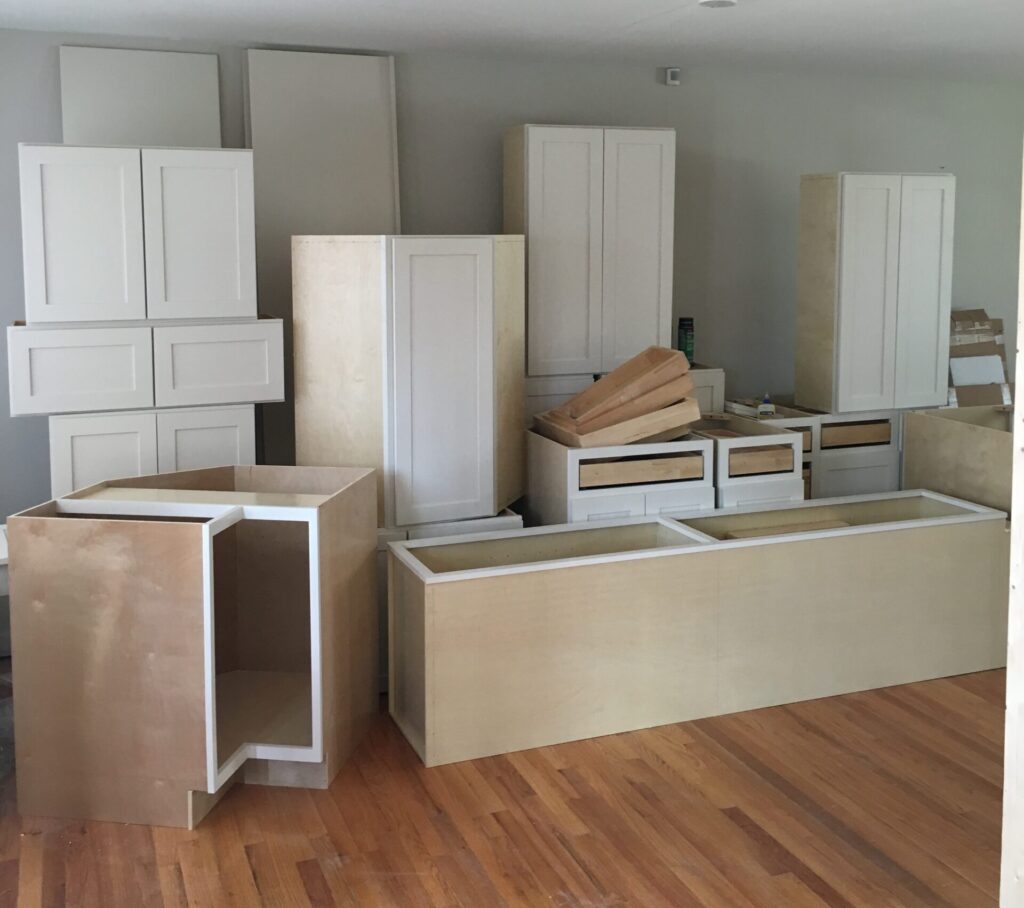
RTA (Ready-to-Assemble) cabinets are still the best bang-for-buck option for a DIY split-level kitchen remodel in 2026. They arrive flat-packed, assemble with glue and brad nails, and the quality has improved dramatically over the past few years.
What to look for in RTA cabinets:
- Plywood box construction (not particleboard) — it handles humidity and heavy loads far better
- Soft-close hinges and drawer slides included — these used to be upgrades, now they’re standard in decent cabinets
- Dovetail drawer construction — a sign of quality joinery
- Full-overlay doors — these give a more modern, seamless look that works well in split-level homes
One thing I’d do differently: take your cabinets all the way to the ceiling. With 8-foot ceilings, there’s no reason to stop short and leave a gap. That gap collects grease, dust, and the random objects that somehow always end up on top of cabinets. Full-height cabinets also make the room feel taller.
Step 4: Creating the Open Concept
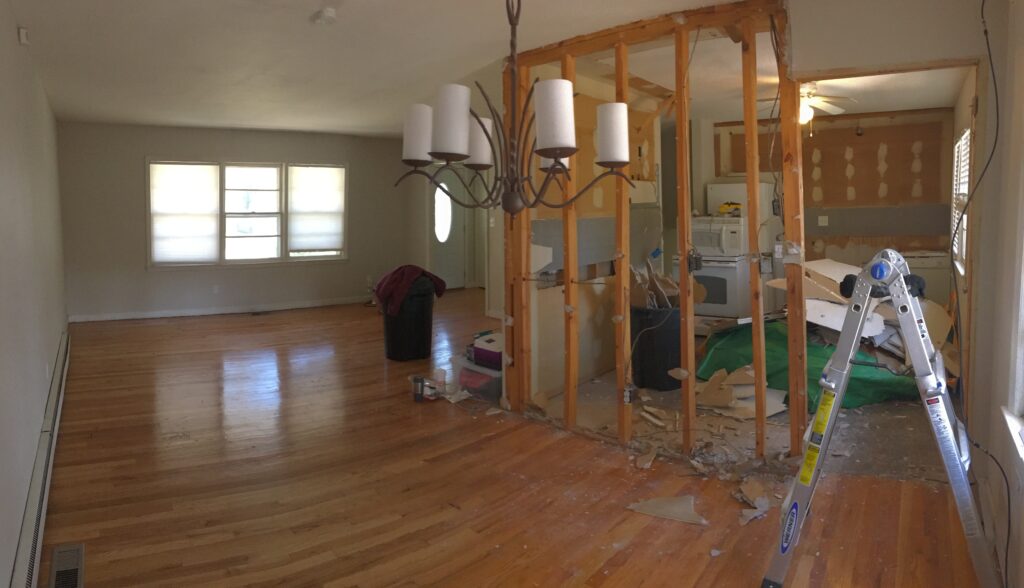
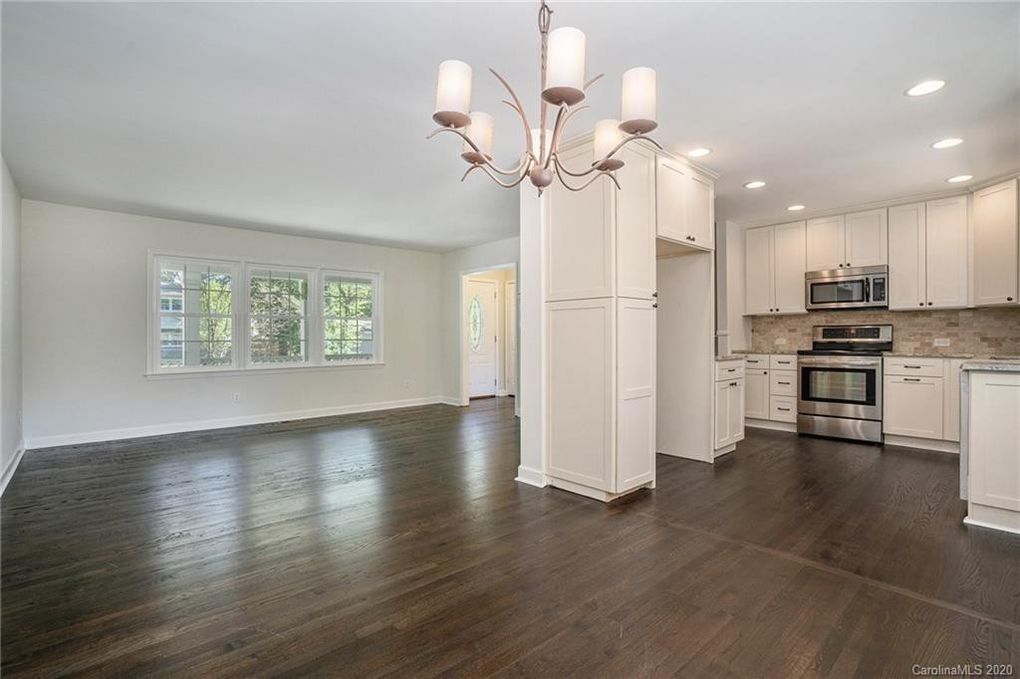
Once the old cabinets were out and the wall came down, the transformation was immediate. Even with just one wall removed, the kitchen went from a cave to a real room you’d want to spend time in.
Here are the four main open-concept approaches I’ve seen work in split-level kitchens:
Option 1: Full Wall Removal
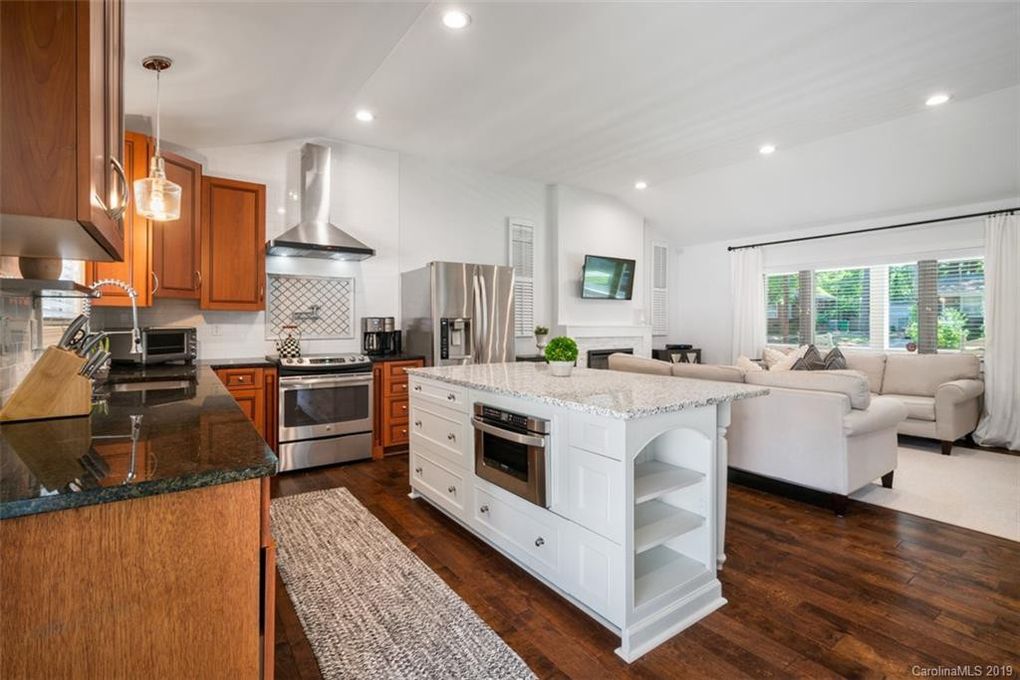
The most dramatic option. Remove the partition wall entirely and create a fully open connection to the living room. This is what I did, and it’s my recommendation if the wall is non-load-bearing. Pair it with a kitchen island if you lose counter space, and run your cabinet uppers all the way to the ceiling.
Option 2: Half-Wall / Bar Opening
If the wall is load bearing or you want to preserve some separation, cut a bar-style opening. This keeps structural integrity while adding visual flow. Add pendant lights above and bar stools below for a natural gathering spot.
Option 3: Full Open Concept + Raised Ceiling
The premium option. Remove all partition walls AND take the ceiling up to the rafters. This creates cathedral-style drama and is increasingly popular in split-level renovations. Budget significantly more — think $40,000–$80,000 for a full contractor job — but the result is stunning.
Option 4: Rearrange and Refresh
If your budget doesn’t allow for wall removal, rearranging appliances, replacing cabinet fronts, adding a backsplash, and installing new lighting can still deliver a meaningful transformation for under $5,000.
Mistakes I Made (So You Don’t Have To)
- Not hiring a structural engineer first — I got lucky, but I should have had a professional confirm the wall was non-load-bearing before touching it.
- Buying cabinets before measuring twice. I ended up with a cabinet that was 3 inches too wide and had to return it and wait 3 weeks for the replacement.
- Skipping the subfloor inspection. Finding the water-damaged section after cabinets were installed would have been a nightmare.
- Not planning for the refrigerator space properly — always account for door swing clearance and ventilation space behind the unit.
- Choosing a backsplash tile I loved in the store that looked completely different on a full wall under kitchen lighting. Order samples first.
Frequently Asked Questions
How much does it cost to remodel a split level kitchen in 2026?
A DIY split-level kitchen remodel typically runs $6,000–$12,000 for new cabinets, countertops, appliances, and flooring. A full contractor remodel with wall removal and high-end finishes can reach $40,000–$70,000+. The biggest variables are cabinet quality and whether structural work is needed.
Do I need a permit to remove a wall in my kitchen?
In most jurisdictions, yes — especially if the wall contains electrical, plumbing, or HVAC, or if it’s load bearing. Check with your local building department before starting. Permits typically cost $100–$500 and protect you when it’s time to sell.
Can I remove a wall in a split-level kitchen myself?
Yes, if the wall is confirmed non-load-bearing and doesn’t contain active utilities. Many homeowners tackle this themselves. Always have electrical confirmed off with a voltage tester before cutting.
What’s the best cabinet brand for a DIY kitchen remodel?
For RTA cabinets in 2026, Lily Ann Cabinets, Cabinetsnow, and The RTA Store are consistently well-reviewed. For semi-custom, IKEA’s SEKTION line remains a reliable budget option with a massive accessory ecosystem.
Planning a split-level renovation? I put everything I learned into one system — a room-by-room roadmap, real budget worksheets, and a contractor bid comparison tool. Built from my own renovation, not generic advice.

Max
Max Lowrie, founder of MySplitLevel.com® and author of The Live In Flip© bought his first split level house in 2016. During a lengthy renovation, Max noticed that there was little useful content online specific to split-level homes. Max now devotes his time to share his knowledge hoping to help homeowners avoid unnecessary mistakes, and provide a blue print for split-level owners nationwide.
Giveaways, Ebook, and Forum coming soon. Be the first to know about new content!