Updated: August 2026
I didn’t set out to fall for mid-century modern. It happened by accident; flying over any suburb of the USA and seeing insanely dystopian “vinyl villages” made my stomach hurt. Coincidentally working on a 1960s split-level, where half the “period-appropriate” choices I was making for the house turned out to have a name and a whole design movement behind them. If you’ve ever looked at a house or a piece of furniture and thought “that looks retro, but not old,” there’s a good chance you were looking at mid-century modern.
Here’s what it actually is, where it came from, and how to spot it.
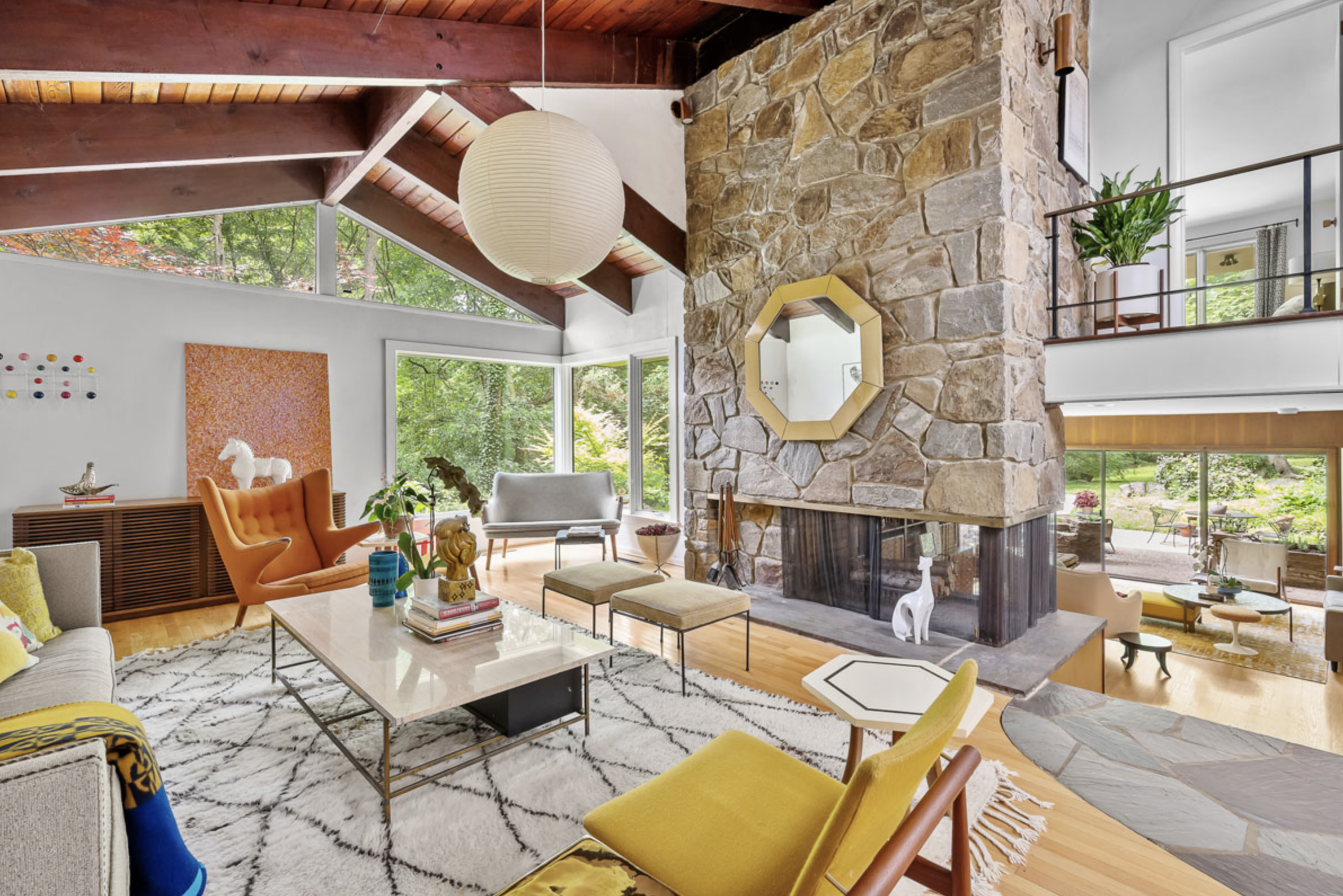
What Mid-Century Modern Actually Means
Mid-century modern (often shortened to MCM) is a design movement that spans roughly 1945 to 1969 — the postwar decades. It’s not just “old furniture” or “anything that looks vintage.” It’s a specific design philosophy built around three ideas: clean lines, function over ornamentation, and honest use of materials. If a piece of furniture or a room looks stripped-down, purposeful, and a little bit optimistic, that’s MCM doing what it’s supposed to do.
The Core Principles
A few threads run through nearly everything considered MCM:
- Clean, geometric lines — furniture and architecture built around simple forms, not elaborate detailing
- Organic curves — borrowed from nature, softening the geometry (think a kidney-shaped coffee table or a curved sofa back)
- Minimal ornamentation — no carving, no gilding, no fuss for its own sake
- Function first — if a design choice didn’t serve a purpose, it typically didn’t make the cut
- Indoor-outdoor integration — large windows, open floor plans, a real emphasis on bringing the outside in

Giveaways, Ebook, and Forum coming soon. Be the first to know about new content!
Where It Came From
MCM grew out of a very specific moment: the years right after World War II, when new manufacturing techniques (molded plywood, fiberglass, bent metal) suddenly made mass-produced, affordable furniture possible in shapes that simply couldn’t have been built before. You can go deeper on the movement’s full history on Wikipedia’s mid-century modern page, but the short version stands: it was also a reaction against the heavier, more ornate styles that came before it — postwar optimism showing up in furniture design, not just architecture.
How to Spot It
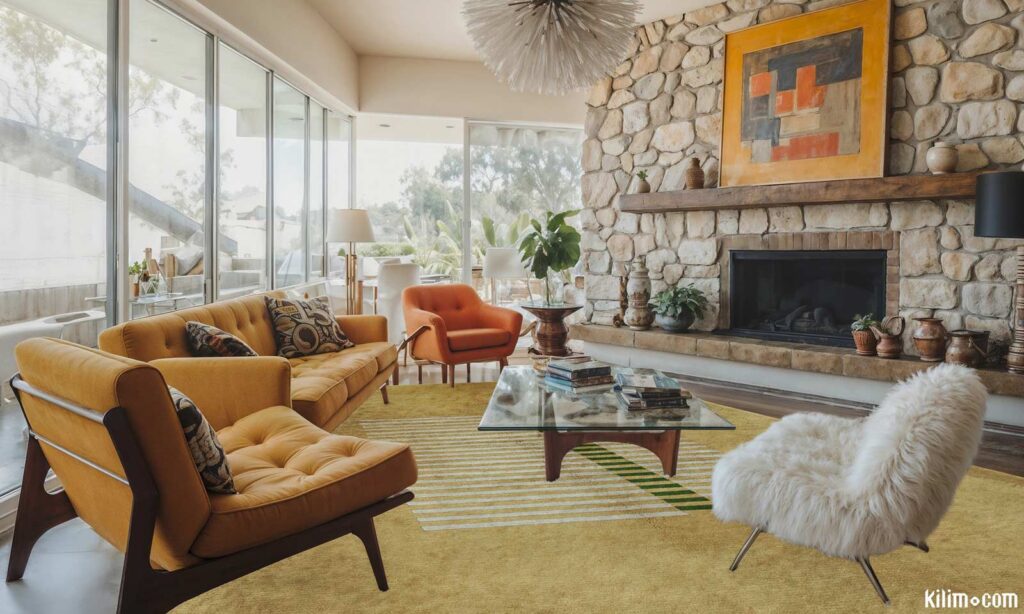
A few practical markers, whether you’re furniture shopping or trying to figure out if your own house qualifies:
- Tapered, angled legs on chairs, sofas, and tables — rarely straight or bulky
- Warm wood tones — walnut and teak show up constantly
- Bold but limited color palettes — a few saturated accent colors against neutral backgrounds, not a rainbow
- Flat planes and low profiles — furniture that sits low and horizontal rather than tall and vertical
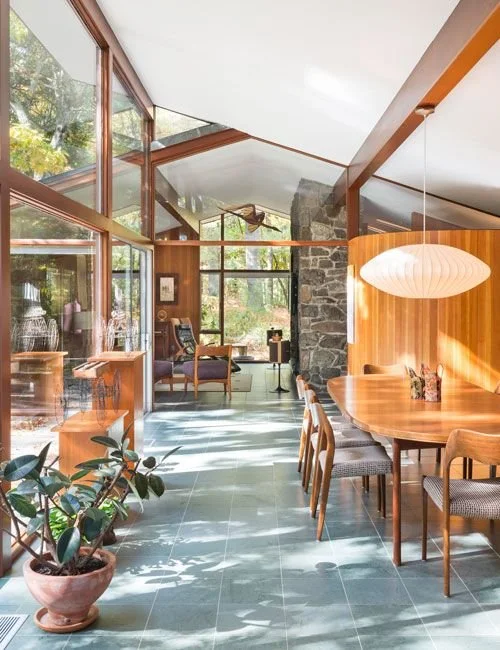
- Walls of glass — in architecture specifically, large windows and sliding glass doors connecting to the outdoors
MCM vs. Similar Styles
This is where people usually get tripped up:
- Danish Modern is technically a subset of MCM — the Scandinavian-specific version, with an even heavier emphasis on craftsmanship and simplicity.
- Atomic Age design overlaps with MCM’s timeline but leans harder into space-race and futuristic motifs (think starburst clocks and boomerang shapes) — more decorative, less restrained.
- Modern farmhouse is a completely different, much more recent style — the confusion usually comes from both being popular renovation aesthetics right now, not from any real design overlap.
Why It’s Having a Moment Again
MCM furniture was built to last — solid wood construction, simple joinery, pieces designed to be functional for decades, not trend cycles. That durability is a big part of why it’s resurfaced so strongly: original and reproduction pieces alike hold up, and the style photographs well for an era that lives online. It’s also just genuinely timeless in a way a lot of more decorative styles aren’t — clean lines don’t date the way heavy ornamentation does.
How This Connects to a Split-Level Renovation
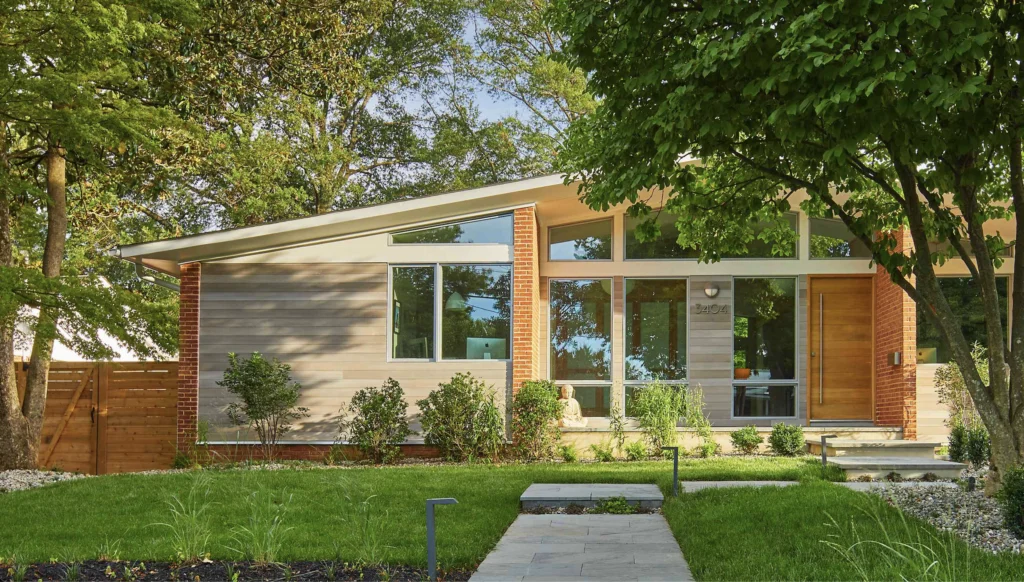
If you own a split-level built in the 1960s or 70s, there’s a real chance your house is architecturally from the MCM era, whether or not anyone ever called it that. The low-slung rooflines, the emphasis on connecting different levels and spaces, the big windows — a lot of split-level DNA and MCM architectural DNA overlap more than people realize. That’s part of why this style fits naturally alongside split-level renovation content on this site, not as an unrelated detour.
Frequently Asked Questions
Are the 70s considered mid-century?
The core MCM period is generally dated 1945 to 1969, so the early 1970s are sometimes included as a late extension of the style, but by the mid-to-late 70s design had shifted toward different aesthetics. A house built in 1970 or 1971 can still carry strong MCM architectural bones even if it’s technically just past the traditional cutoff.
How can you tell if something is mid-century modern?
Look for tapered legs, clean geometric lines, warm wood tones like walnut or teak, minimal ornamentation, and an overall sense that every design choice serves a function rather than just decoration.
What style is replacing mid-century modern?
No single style has fully replaced it — MCM has remained popular for years rather than being displaced. If anything, it’s often blended with warmer, more organic modern styles rather than being swapped out entirely.
Bottom Line
Mid-century modern isn’t just a look, it’s a specific set of design decisions with real history behind them — and once you know what you’re looking for, you’ll start noticing it everywhere, including possibly in your own split-level’s bones. This is the foundation piece for everything else I’ll cover on MCM style throughout the site — kitchens, living rooms, furniture, and more are all coming.

Max
Max Lowrie, founder of MySplitLevel.com® and author of The Live In Flip© bought his first split level house in 2016. During a lengthy renovation, Max noticed that there was little useful content online specific to split-level homes. Max now devotes his time to share his knowledge hoping to help homeowners avoid unnecessary mistakes, and provide a blue print for split-level owners nationwide.
Giveaways, Ebook, and Forum coming soon. Be the first to know about new content!